
New Year's Weight Loss Resolution 2026: Why Visualization Makes It Stick
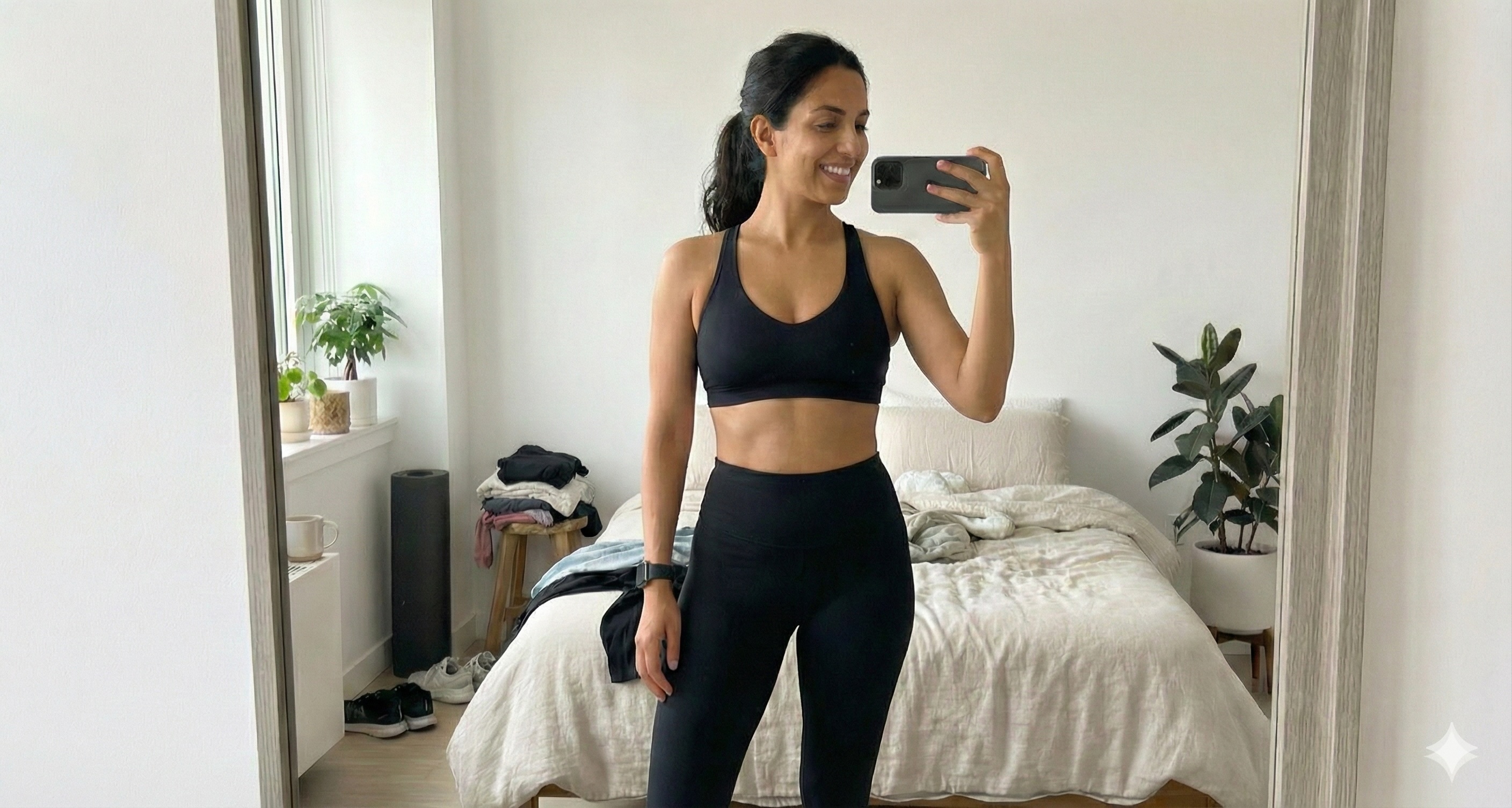

It's that time of year again. You're standing in front of the mirror on January 1st, making the same promise you made last year: "This is the year I finally lose the weight." You feel motivated. You join a gym. You stock up on healthy food. You're ready.
By February, the gym membership is collecting dust. The motivation is gone. And you're back where you started, wondering why you can't seem to make it stick.
Here's the uncomfortable truth: 80% of New Year's resolutions fail by the second week of February. And weight loss resolutions have one of the highest failure rates of all.
Why Most Weight Loss Resolutions Fail
The problem isn't your willpower. It's not that you're lazy or uncommitted. The problem is how your brain processes vague goals.
When you say "I want to lose weight," your brain has nothing concrete to work with. What does that actually look like? How will you know when you've succeeded? What are you working toward?
Your brain needs a clear, visual target. Without one, the goal stays abstract—and abstract goals are easy to abandon when things get hard.
The Psychology of "Seeing" Your Goal
Athletes have used visualization techniques for decades. Before a race, a runner doesn't just think "I want to run fast." They mentally rehearse the entire race—seeing themselves cross the finish line, feeling the sensation of victory.
The same principle applies to weight loss. When you can see yourself at your goal weight—not as a vague mental image, but as a realistic photo—your brain treats it differently. It becomes real. It becomes something worth working for.
This isn't pseudoscience. Studies show that people who visualize their goals are significantly more likely to achieve them. The clearer the visualization, the stronger the effect.
Why "Lose 30 Pounds" Isn't Enough
Numbers are great for tracking, but they don't motivate. When you're three weeks in, exhausted, tempted by pizza, "I want to lose 30 pounds" doesn't pull you back on track. It's just a number.
But if you've seen a realistic photo of yourself 30 pounds lighter—if you know exactly what that version of you looks like—that image sticks in your mind. It becomes your North Star.
When you're about to skip the gym, you think about that photo. When you're reaching for the extra slice, you remember what you're working toward. The goal isn't abstract anymore. It's a version of yourself that already exists in your mind.
How to Set a Resolution That Actually Works
1. Make It Visual
Don't just write down "lose weight." See it. Create a realistic image of what your goal looks like. This is where AI visualization becomes powerful—it gives you a concrete, photo-realistic preview of your future self.
2. Break It Into Milestones
Losing 50 pounds is overwhelming. Losing 10 pounds by March is doable. Visualize each milestone. See yourself at 10 pounds down, 20 pounds down, 30 pounds down. Each milestone becomes its own mini-goal.
3. Focus on the Process, Not Just the Outcome
Your resolution shouldn't be "lose 30 pounds." It should be "go to the gym 3 times a week" or "eat protein at every meal." These are actions you can control. The weight loss is the result.
4. Plan for Setbacks
You will have bad days. You will skip workouts. You will eat too much at a party. This is normal. The difference between success and failure isn't perfection—it's getting back on track the next day instead of giving up entirely.
What This Looks Like in Practice
Let's say your goal is to lose 40 pounds by summer. Here's how visualization changes your approach:
Without visualization: "I want to lose 40 pounds" → vague mental image → lose motivation by February → quit.
With visualization: You see a photo of yourself 40 pounds lighter. You know what your face will look like. You know how your clothes will fit. This image is in your head when you're making decisions. When you're tempted to skip the gym, you remember the photo. When you're choosing between a salad and fries, you think about that version of yourself. The goal is always present.
The First Step: See Where You're Going
You can't navigate without a destination. Before you commit to a diet plan, a workout routine, or any other strategy, answer this question: What exactly am I working toward?
See it clearly. Make it real. Then the work becomes purposeful instead of aimless.
This year, don't make another resolution that fades by February. Make one that sticks—because you can see exactly where you're going.
Ready to see your own transformation?
Upload your photo and let our AI show you what's possible. It takes less than a minute.
Visualize My Weight Loss Now